Emperor Qinshihuang’s Mausoleum Site Museum
Photo: Own work — CC0, via Wikimedia Commons
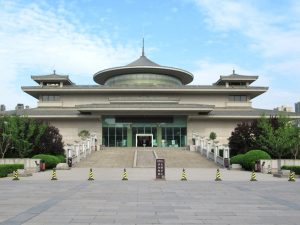
The Emperor Qinshihuang’s Mausoleum Site Museum, commonly known as the Terracotta Army Museum, showcases over 8,000 life-sized terracotta soldiers, horses, and chariots. Discovered in 1974, these artifacts were crafted to protect Emperor Qin Shi Huang in the afterlife. The museum, located in Lintong District, Xi’an, offers visitors a glimpse into ancient Chinese military history and artistry. It is recognized as a UNESCO World Heritage Site and is often referred to as the ‘Eighth Wonder of the World.’
Planning your visit
The Terracotta Army was found by farmers digging a well in 1974, and the scale of what they uncovered is still being excavated: over 8,000 life-sized soldiers, horses and chariots buried to guard Emperor Qin Shi Huang in the afterlife, each figure with individual facial features. The museum is built directly over the pits in Lintong District, so you view the army in situ, in the ground where it stood — Pit 1 alone is the size of an aircraft hangar.
It sits about an hour from central Xi'an, so bookable options mostly bundle the transport. All-inclusive bus tours and group day tours handle the drive with a guide, and many combine the site with Xi'an's intact Ming city wall, which is the other principal sight in the city. Entry tickets and ticket-booking services are available for independent visitors, and walking tours with entry included give a guided route through the three pits and the bronze chariot hall. Current options are below.
Before you book
Where is Emperor Qinshihuang’s Mausoleum Site Museum?
Emperor Qinshihuang’s Mausoleum Site Museum is in Xi'an, China. The map on this page marks its exact location.
Do I need to book Emperor Qinshihuang’s Mausoleum Site Museum in advance?
Tickets can be bought on the door at quiet times, but booking ahead fixes the date and avoids the queue at busy ones. Live availability is shown on this page.