
Neanderthal Museum
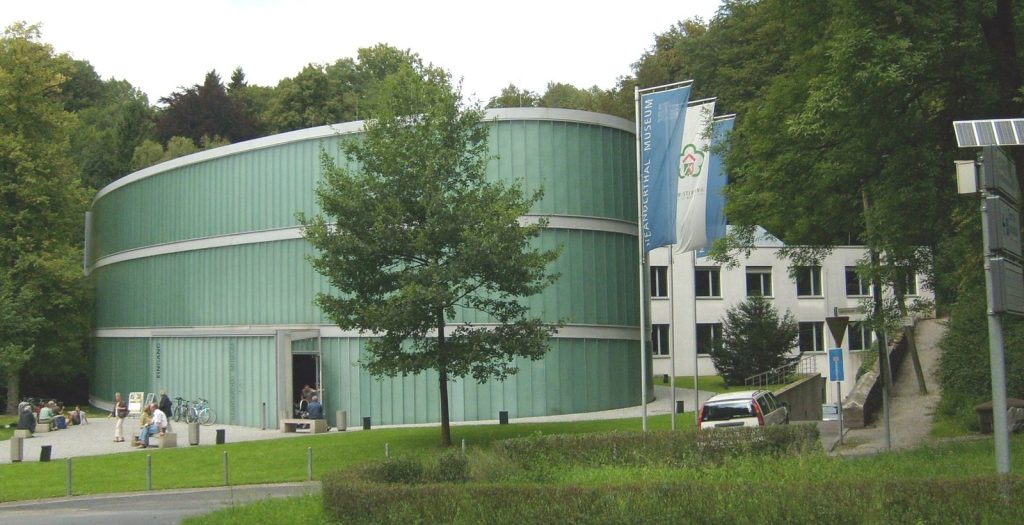
Photo: Own work — CC BY-SA 3.0, via Wikimedia Commons
The Neanderthal Museum in Mettmann, Germany, showcases human evolution from the African savannahs to the present, featuring life-size Neanderthal reconstructions.
Planning your visit
The Neander valley is where the type specimen was found in 1856 — quarry workers uncovered bones in a limestone cave, and the species was named for the place, which itself was named after a seventeenth-century hymn writer. The cave was quarried away entirely; the site was relocated by excavation in the 1990s, and further fragments of the original individual were recovered.
The museum opened in 1996 on that ground, and it presents human evolution from African origins to the present through reconstructions, casts and interactive material. The life-size Neanderthal figures, produced by Dutch palaeoartists using forensic reconstruction from skulls, are the most-discussed exhibits — deliberately individualised and clothed in contemporary style in some cases, arguing against the brutish stereotype.
Understanding of Neanderthals has changed substantially in recent decades, including the finding that most modern non-African humans carry Neanderthal DNA, and the museum keeps pace with that.
Mettmann is near Düsseldorf. Allow two hours. The main booking is an admission ticket. Current availability is shown below.
Before you book
Where is Neanderthal Museum?
Neanderthal Museum is in Mettmann, Germany. The map on this page marks its exact location.
How long should I allow for Neanderthal Museum?
Allow two hours. That is the time the collection itself takes at an unhurried pace, before any queue.
Do I need to book Neanderthal Museum in advance?
Tickets can be bought on the door at quiet times, but booking ahead fixes the date and avoids the queue at busy ones. Live availability is shown on this page.