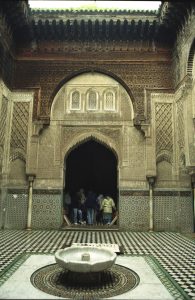
Bou Inania Madrasa
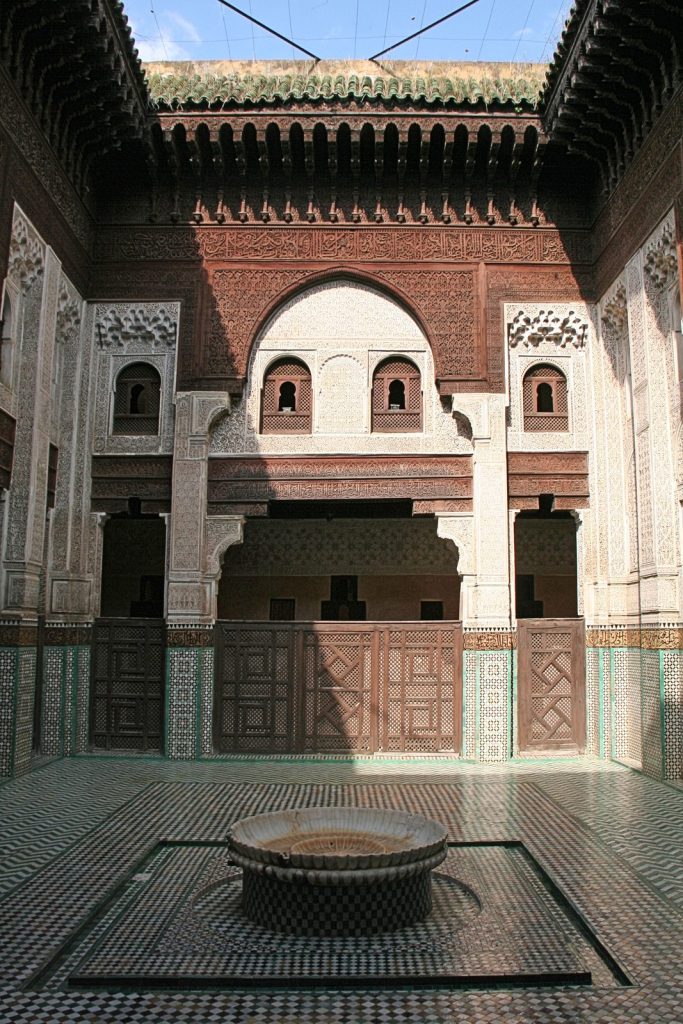
Photo: Own work — CC BY-SA 3.0, via Wikimedia Commons
The Bou Inania Madrasa, built between 1350 and 1355 by Sultan Abu Inan Faris, is a notable example of Marinid architecture, serving as both a theological school and a mosque.
Planning your visit
The Bou Inania is the grandest of the Fes madrasas and the only one that also functioned as a full congregational mosque, which is why it carries a minaret and why, unusually, it remains an active place of worship. Sultan Abu Inan Faris built it between 1350 and 1355 at considerable expense — the story goes that he threw the accounts into the river when questioned about the cost, remarking that beauty is not expensive at any price.
The courtyard is the set piece: a marble floor split by a water channel, walls layered in zellij mosaic, carved stucco and cedar, and tall arches leading to the prayer hall behind an intricate wooden screen. The onyx and marble, the carved lintels and the sheer vertical scale distinguish it from the smaller madrasas nearby. Across the street stands the remains of the Dar al-Magana, a fourteenth-century water clock whose mechanism has never been fully explained.
Because it retains its religious function, access to the prayer hall itself is restricted to Muslims, and the madrasa closes to visitors during prayer times — worth planning around.
It sits on Talaa Kebira, one of the medina's main arteries. Bookable options are guided medina tours including the madrasa alongside the tanneries, souks and other monuments, which is the practical way to navigate Fes el-Bali. Current options are shown below.
Before you book
Where is Bou Inania Madrasa?
Bou Inania Madrasa is in Fes, Morocco. The map on this page marks its exact location.
Do I need to book Bou Inania Madrasa in advance?
Tickets can be bought on the door at quiet times, but booking ahead fixes the date and avoids the queue at busy ones. Live availability is shown on this page.