Capital Museum
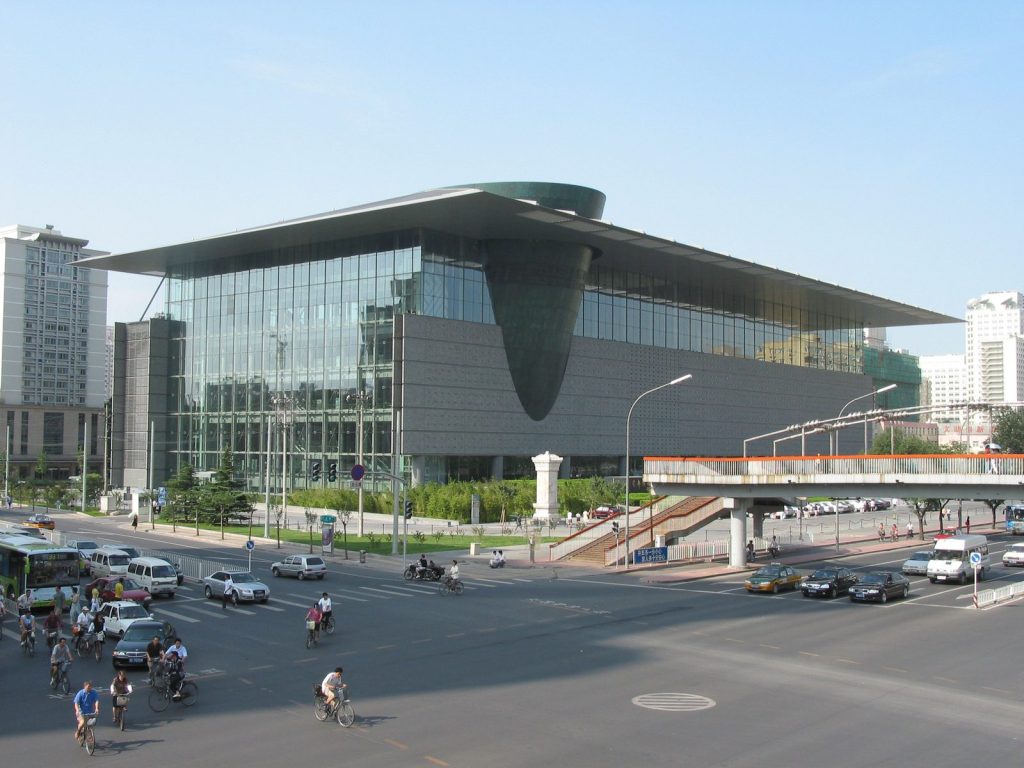
Photo: Own work — CC BY-SA 3.0, via Wikimedia Commons
Established in 1981 and relocated to its current location in 2006, the Capital Museum houses over 200,000 cultural relics, including ancient porcelain, bronze, calligraphy, painting, jade, sculpture, and Buddhist statues. It serves as a hub for exhibitions, research, public education, and cultural exchange, contributing to Beijing’s status as a cultural center and international metropolis.
Planning your visit
The Capital Museum covers Beijing itself: the city's history from prehistoric settlement through its role as capital under the Yuan, Ming and Qing, and into the modern era. Moved in 2006 into a large building on Fuxingmenwai Avenue — a bronze-clad cylinder puncturing a glass box, meant to evoke an artefact emerging from an excavation — it holds over 200,000 objects including porcelain, bronzes, jade, calligraphy, painting and Buddhist sculpture.
The Beijing-focused galleries are what distinguish it from the National Museum: exhibitions on the old city walls and gates, courtyard house life, folk customs and the capital's development answer questions that arise while walking around modern Beijing and cannot be answered by imperial collections alone.
Admission is free with advance real-name reservation, and it is markedly quieter than the National Museum or the Palace Museum, which makes for a more comfortable visit.
Bookable options include tickets with reservation handled, and guided cultural tours covering the museum's less obvious holdings. Guides are useful given uneven English labelling and the amount of local historical context the Beijing galleries assume. Current availability is shown below.
Before you book
Where is Capital Museum?
Capital Museum is in Beijing, China. The map on this page marks its exact location.
Do I need to book Capital Museum in advance?
Guided tours run to a fixed schedule and small group sizes, so they are usually booked ahead.