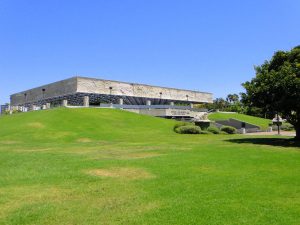
Getty Center
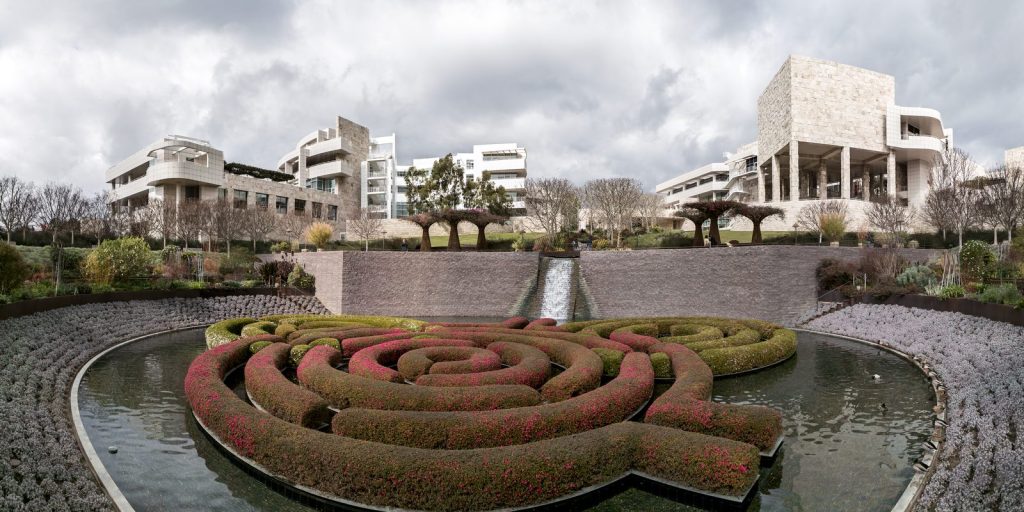
Photo: Own work — CC BY-SA 4.0, via Wikimedia Commons
The Getty Center in Los Angeles showcases European art from the Middle Ages to the present, set amid modern architecture and gardens.
Planning your visit
The Getty Center is free, and getting there is part of it: a driverless tram climbs the ridge above the 405, and the city drops away as you rise. Richard Meier's travertine pavilions sit at the top, clad in stone quarried near Tivoli and split rather than cut so the fossil texture shows, arranged around courtyards with views from downtown Los Angeles to the Pacific. On clear days the setting competes with the collection.
The holdings cover European art from the Middle Ages to the early twentieth century — Van Gogh's Irises, Rembrandt, Titian, Rubens, French decorative arts installed in period rooms, and an outstanding collection of illuminated manuscripts. Photography is a real strength, running from the earliest processes to the present, and is shown in rotating exhibitions.
The Central Garden by Robert Irwin is a designed artwork in its own right, and the Cactus Garden on the south promontory gives the best view over the basin.
Admission costs nothing but parking is charged and timed reservations are sometimes required, so checking before driving matters. Allow half a day minimum. Bookable options include guided tours of the collection and architecture. Note the separate Getty Villa in Malibu holds the antiquities. Current availability is listed below.
Before you book
Where is Getty Center?
Getty Center is in Los Angeles, United States. The map on this page marks its exact location.
How long should I allow for Getty Center?
Allow half a day. That is the time the collection itself takes at an unhurried pace, before any queue.
Do I need to book Getty Center in advance?
Guided tours run to a fixed schedule and small group sizes, so they are usually booked ahead.