Jewish Museum Berlin
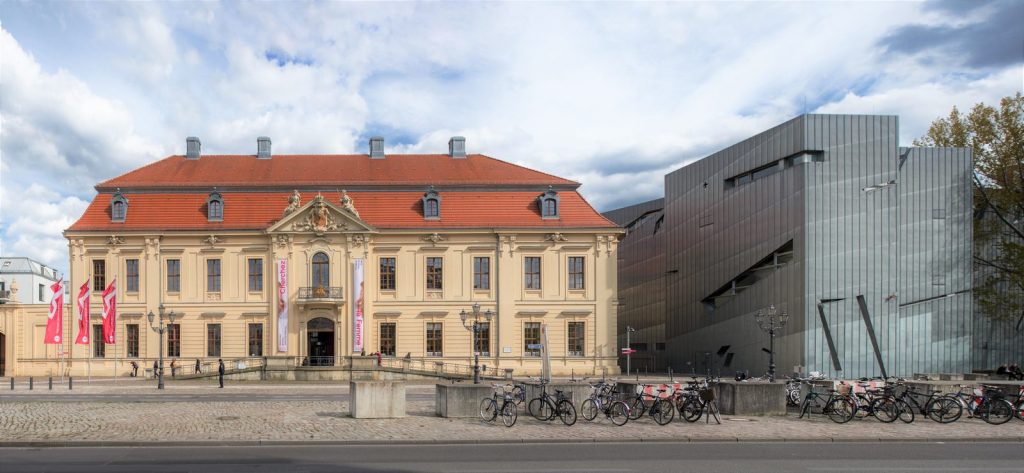
Photo: Own work — CC BY-SA 4.0, via Wikimedia Commons
The Jewish Museum Berlin, designed by Daniel Libeskind, presents German-Jewish history from the Middle Ages to the present, featuring permanent and temporary exhibitions, educational programs, and a children’s world.
Planning your visit
Daniel Libeskind's building was completed in 1999 and stood empty for two years, drawing 350,000 visitors who came to walk through an unfilled museum — which tells you that the architecture carries the argument as much as any exhibition could.
The plan is a fractured zigzag, and three underground axes cross beneath it. The Axis of Exile leads to a garden of 49 concrete pillars set on sloping ground, deliberately disorienting. The Axis of the Holocaust ends at the Holocaust Tower, a bare unheated concrete void lit only by a slit high above. Voids cut vertically through the building, unreachable and empty, representing absence. In one, Menashe Kadishman's Shalechet covers the floor with 10,000 iron faces that clang underfoot as you walk across them.
The permanent exhibition, redesigned and reopened in 2020, covers German-Jewish history from the Middle Ages to the present — deliberately not only the Holocaust, but the long story of a community that was integral to German life.
Allow three hours. It sits in Kreuzberg. The main booking is an entrance ticket. Current availability is listed below.
Before you book
Where is Jewish Museum Berlin?
Jewish Museum Berlin is in Berlin, Germany. The map on this page marks its exact location.
How long should I allow for Jewish Museum Berlin?
Allow three hours. That is the time the collection itself takes at an unhurried pace, before any queue.
Do I need to book Jewish Museum Berlin in advance?
Tickets can be bought on the door at quiet times, but booking ahead fixes the date and avoids the queue at busy ones. Live availability is shown on this page.