
Luoyang Museum
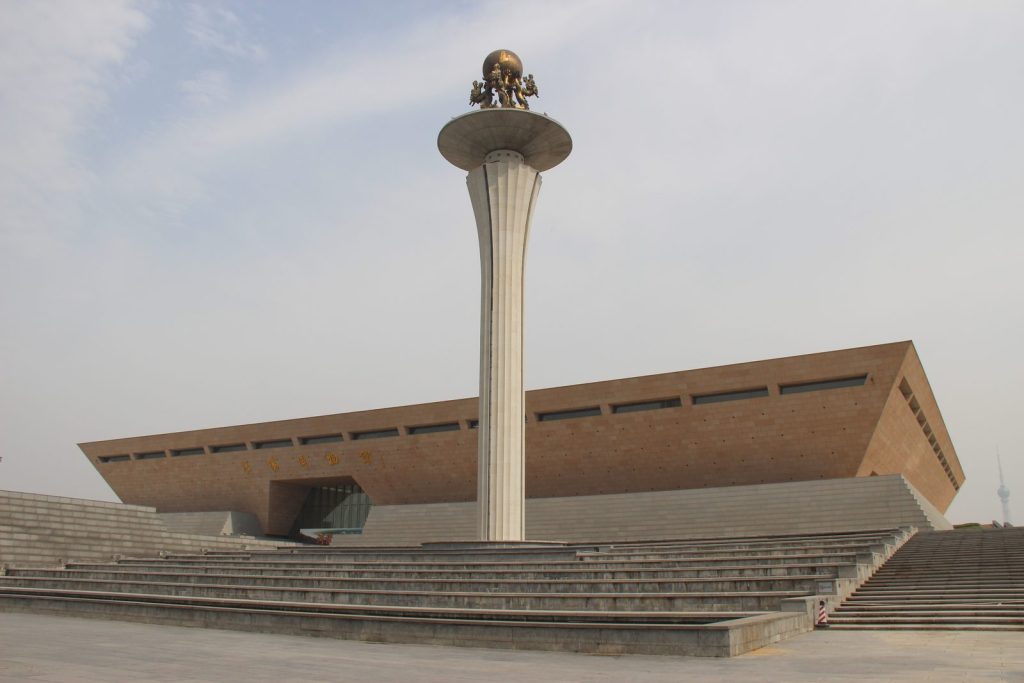
Photo: https://www.flickr.com/photos/101561334@N08/14275144293/ — CC0, via Wikimedia Commons
Established in 1958, Luoyang Museum displays artifacts from Neolithic times to 937 AD, reflecting the city’s historical significance as a former capital.
Planning your visit
Luoyang was capital to thirteen dynasties, and for long stretches of Chinese history it was the political centre of the empire — the eastern capital of the Han, the Northern Wei capital when Buddhism took hold, and a Tang metropolis. The museum covers that with material running from Neolithic settlement to 937 AD.
The Northern Wei and Tang holdings are the strongest. Tang tomb figures — horses, camels, foreign merchants and musicians in three-colour sancai glaze — document a cosmopolitan city at the eastern end of the Silk Road. Bronze ritual vessels from the Zhou, whose ceremonial centre was here, are of the first rank.
The Buddhist material connects directly to the Longmen Grottoes a few kilometres away, where tens of thousands of figures were carved into limestone cliffs from the fifth century onward — the reason most visitors come to Luoyang, and considerably more legible after the museum.
Admission is free with reservation. Allow two hours. The main booking is an entry ticket. Current availability is shown below.
Before you book
Where is Luoyang Museum?
Luoyang Museum is in Luoyang, China. The map on this page marks its exact location.
How long should I allow for Luoyang Museum?
Allow two hours. That is the time the collection itself takes at an unhurried pace, before any queue.
Do I need to book Luoyang Museum in advance?
Tickets can be bought on the door at quiet times, but booking ahead fixes the date and avoids the queue at busy ones. Live availability is shown on this page.