
Museum of Cádiz
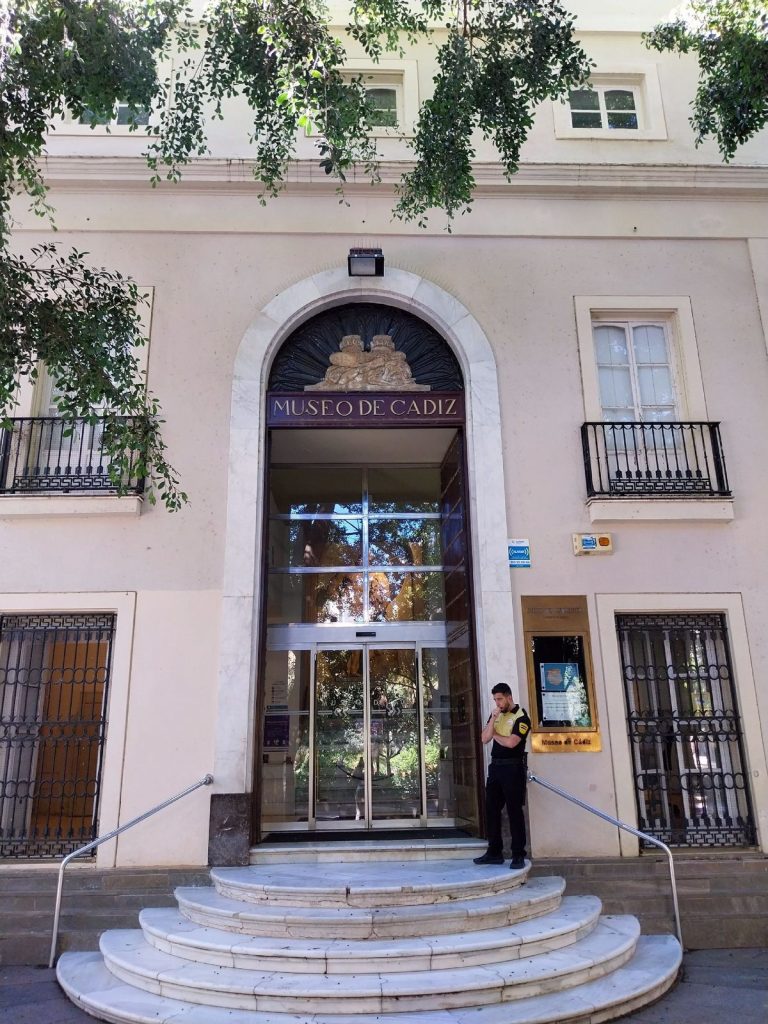
Photo: Own work — CC0, via Wikimedia Commons
The Museum of Cádiz offers a journey from Phoenician and Roman culture through to 20th-century Spanish painting, featuring works by Zurbarán, Murillo, and Rubens.
Planning your visit
Cadiz claims to be the oldest continuously inhabited city in western Europe, founded by Phoenicians from Tyre around 1100 BC as Gadir, and the museum's archaeological collection covers that depth.
The Phoenician sarcophagi are its treasures: two anthropoid marble coffins, one male found in 1887 and one female found in 1980 after the archaeologist who predicted a matching pair had died, carved in the Phoenician style with Greek influence and unlike anything else found in the western Mediterranean.
Roman Cadiz is represented by sculpture, glass and material from the theatre nearby — one of the largest in the Roman world, only rediscovered in 1980.
The fine art floors hold Zurbaran's series of saints painted for a Carthusian monastery, alongside Murillo, Rubens and Spanish painting to the twentieth century.
An ethnographic section covers the Tia Norica marionette tradition, a Cadiz speciality.
Bookable options include guided tours combining the museum with the Roman theatre. Current availability is shown below.
Before you book
Where is Museum of Cádiz?
Museum of Cádiz is in Cádiz, Spain. The map on this page marks its exact location.
Do I need to book Museum of Cádiz in advance?
Guided tours run to a fixed schedule and small group sizes, so they are usually booked ahead.