Natural History Museum of Venice
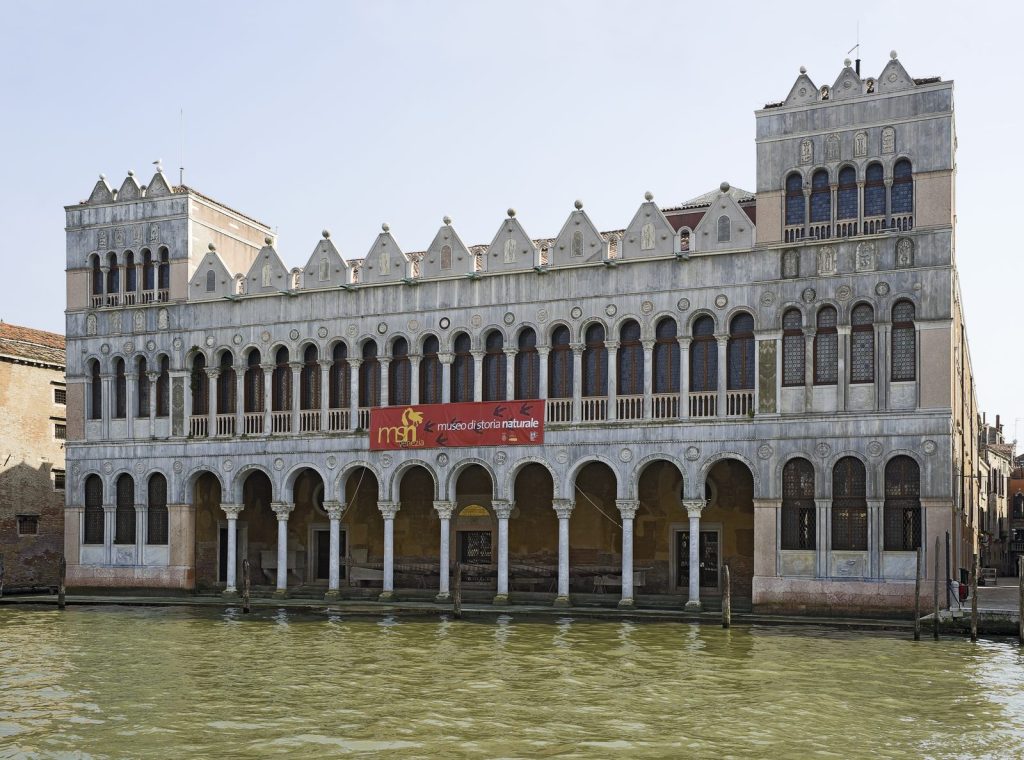
Photo: Own work — CC BY-SA 4.0, via Wikimedia Commons
Located in the 13th-century Fontego dei Turchi, the museum houses extensive zoological, botanical, and paleontological collections, offering insights into the natural history of the Venetian lagoon.
Planning your visit
The Natural History Museum of Venice occupies the Fontego dei Turchi, a thirteenth-century palace on the Grand Canal that served as the trading house and residence for Ottoman merchants from 1621 until 1838 — the fondaco system by which Venice housed and controlled foreign traders.
The collection's centrepiece is the Ligabue expedition material: an Ouranosaurus skeleton some seven metres long and a giant crocodile, both excavated in Niger in the 1970s by a Venetian-funded expedition, displayed in a hall that gives them room.
The Venetian lagoon galleries are the more locally relevant part, covering the ecology of a lagoon that is entirely artificial in its present form — maintained by centuries of engineering, diverting rivers and managing sediment — and now threatened by subsidence and sea level rise.
Natural history cabinets and ethnographic material complete it.
Allow ninety minutes. The main booking is an entrance ticket. Current availability is shown below.
Before you book
Where is Natural History Museum of Venice?
Natural History Museum of Venice is in Venice, Italy. The map on this page marks its exact location.
How long should I allow for Natural History Museum of Venice?
Allow ninety minutes. That is the time the collection itself takes at an unhurried pace, before any queue.
Do I need to book Natural History Museum of Venice in advance?
Tickets can be bought on the door at quiet times, but booking ahead fixes the date and avoids the queue at busy ones. Live availability is shown on this page.