
Suzhou Museum
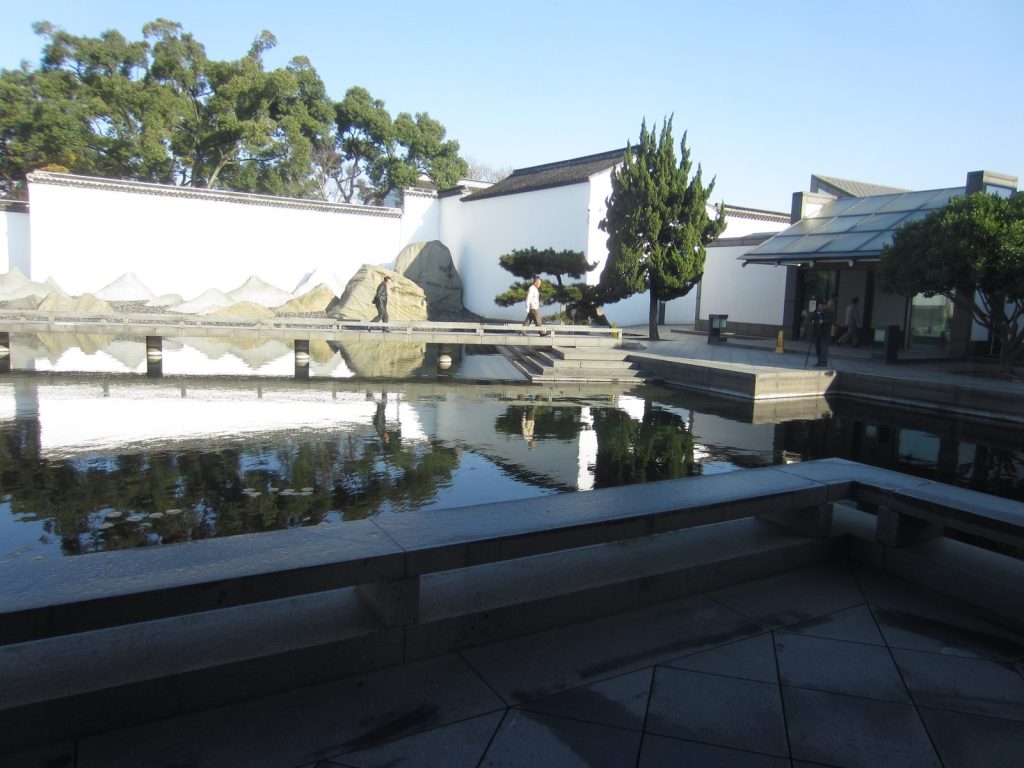
Photo: Own work — CC BY-SA 4.0, via Wikimedia Commons
Established in 1960 and relocated in 2006 to a building designed by I.M. Pei, Suzhou Museum houses approximately 30,000 artifacts, including unearthed cultural relics, ancient paintings, calligraphy, and crafts. It offers permanent exhibitions on prehistoric pottery, jade, Buddhist relics, and Suzhou’s history, attracting over 2 million visitors annually.
Planning your visit
I.M. Pei designed the Suzhou Museum in his ancestral city, and he was in his late eighties when it opened in 2006. It is a distillation of everything Suzhou means: white walls, dark grey trim, geometric abstraction of the traditional pitched roof, and a garden with a rock composition set against a blank white wall like an ink painting made three-dimensional. Pei called it his small daughter, and it is widely regarded as among his best late works.
The building sits beside the Humble Administrator's Garden and the Prince Zhong's Mansion, so it belongs physically to the classical garden district it abstracts.
The collection of around 30,000 objects covers unearthed relics from the region, ancient painting and calligraphy, jade, ceramics and crafts, with Buddhist reliquary material from local pagodas among the strongest holdings. Suzhou's own history as a wealthy centre of silk, scholarship and garden-building runs through it.
Admission is free with advance reservation, and the museum is extremely popular — slots are released on a rolling basis and go quickly.
Bookable options are entry tickets with the reservation handled. Combining the museum with the neighbouring gardens makes the obvious day. Current availability is shown below.
Before you book
Where is Suzhou Museum?
Suzhou Museum is in Suzhou, China. The map on this page marks its exact location.
Do I need to book Suzhou Museum in advance?
Tickets can be bought on the door at quiet times, but booking ahead fixes the date and avoids the queue at busy ones. Live availability is shown on this page.