Musée Guimet
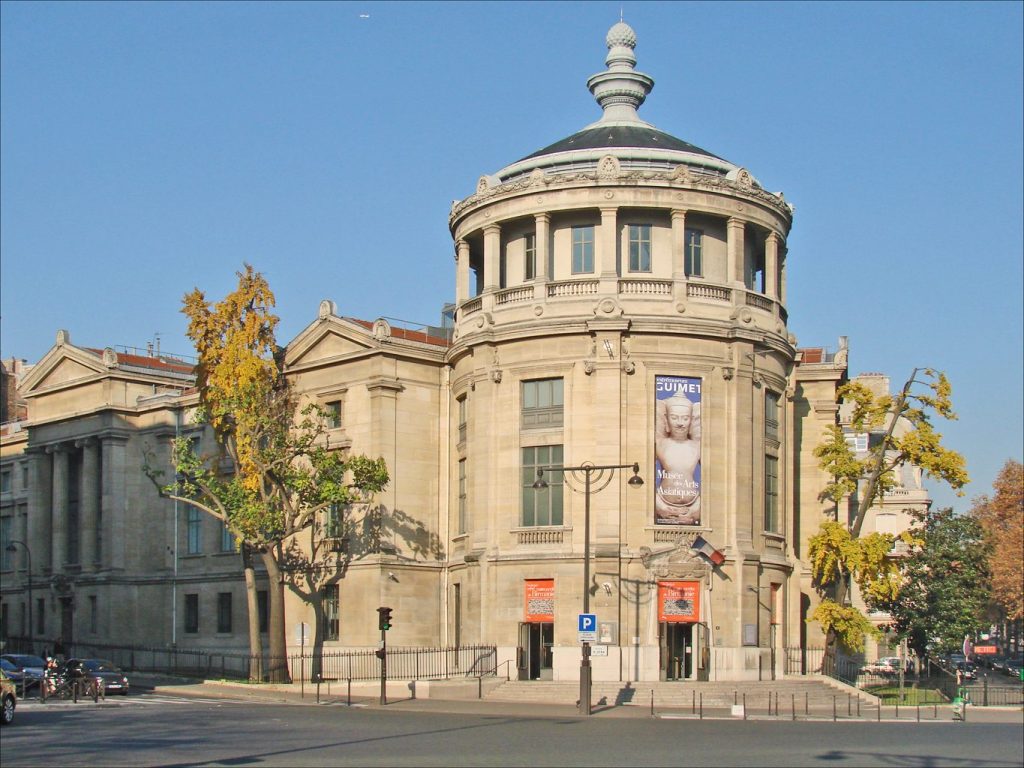
Photo: Flickr: Le musée Guimet (Paris) — CC BY 2.0, via Wikimedia Commons
The Musée Guimet in Paris houses one of the largest collections of Asian art outside Asia, featuring artifacts from countries like Cambodia, Thailand, Vietnam, Tibet, India, and Nepal.
Planning your visit
The Guimet holds the largest collection of Asian art in Europe, and it began as one industrialist's obsession. Emile Guimet, a Lyon manufacturer, travelled through Egypt, Greece, Japan, China and India in the 1870s collecting religious objects, intending to found a museum of comparative religion. The state absorbed it, added the Asian holdings of the Louvre, and the result covers Cambodia, Vietnam, Thailand, Indonesia, India, Nepal, Tibet, China, Korea and Japan across several floors.
The Khmer collection is the outstanding element and the largest outside Cambodia — sculpture removed from Angkor and other sites during the French protectorate, including monumental heads and the pediments of temple doorways. The Chinese bronzes and ceramics, the Tibetan Buddhist material and the Japanese holdings are each substantial in their own right.
The Buddhist Pantheon annexe nearby, with its Japanese garden, is included in the ticket and frequently missed.
The museum reopened after renovation and sits near Trocadero, close to the Eiffel Tower. Allow two to three hours. Bookable options include guided tours focused on the religions of the Indian world, which suits material that assumes iconographic knowledge most visitors do not have. Current availability is listed below.
Before you book
Where is Musée Guimet?
Musée Guimet is in Paris, France. The map on this page marks its exact location.
How long should I allow for Musée Guimet?
Allow two to three hours. That is the time the collection itself takes at an unhurried pace, before any queue.
Do I need to book Musée Guimet in advance?
Guided tours run to a fixed schedule and small group sizes, so they are usually booked ahead.