Naturhistorisches Museum Wien
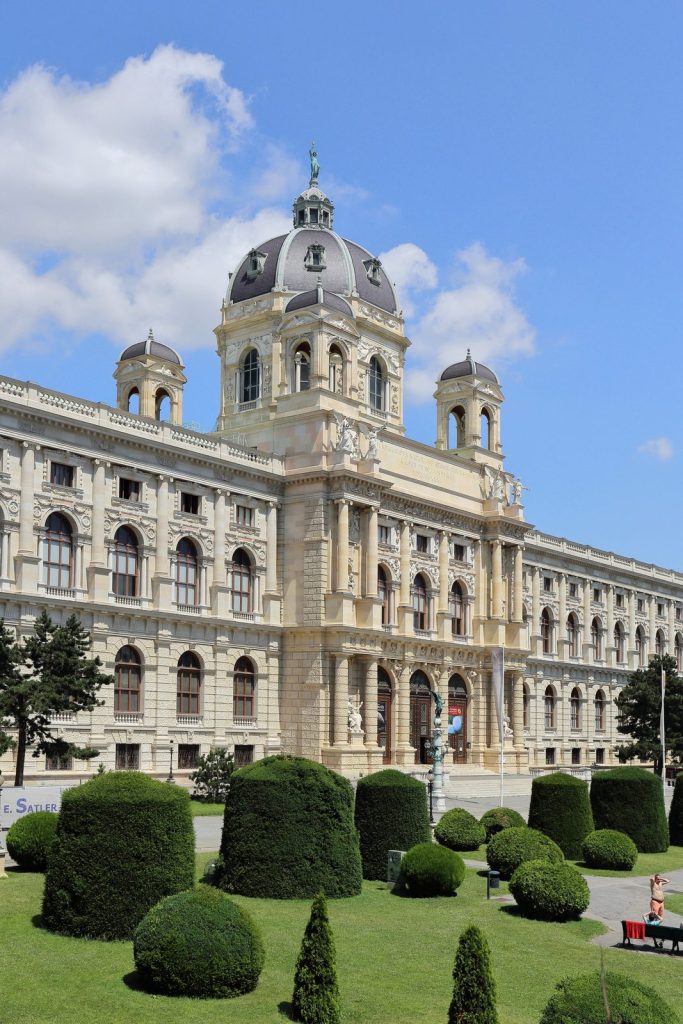
Photo: Own work — CC BY-SA 4.0, via Wikimedia Commons
The Naturhistorisches Museum Wien houses around 30 million specimens, including the Venus of Willendorf and the world’s largest meteorite collection.
Planning your visit
The Naturhistorisches Museum faces the Kunsthistorisches across Maria-Theresien-Platz in an identical building — the Habsburgs built the pair to hold the imperial collections, with nature on one side and art on the other, a symmetry that says a good deal about nineteenth-century thinking.
Around 30 million specimens fill it. The Venus of Willendorf, a limestone figurine some 30,000 years old and among the most famous prehistoric objects in the world, is displayed in a small case that surprises people with its size — eleven centimetres. The meteorite collection is the largest on public display anywhere. Alongside sit dinosaur skeletons, minerals, anthropology and vast taxidermy holdings.
The interiors are largely unaltered from 1889, with painted ceilings, oak cabinetry and the original display cases still in use, which makes the building a museum of nineteenth-century museum practice as much as of nature.
Allow two to three hours. The main booking is an entry ticket. Current availability is shown below.
Before you book
Where is Naturhistorisches Museum Wien?
Naturhistorisches Museum Wien is in Vienna, Austria. The map on this page marks its exact location.
How long should I allow for Naturhistorisches Museum Wien?
Allow two to three hours. That is the time the collection itself takes at an unhurried pace, before any queue.
Do I need to book Naturhistorisches Museum Wien in advance?
Tickets can be bought on the door at quiet times, but booking ahead fixes the date and avoids the queue at busy ones. Live availability is shown on this page.