Humayun’s Tomb
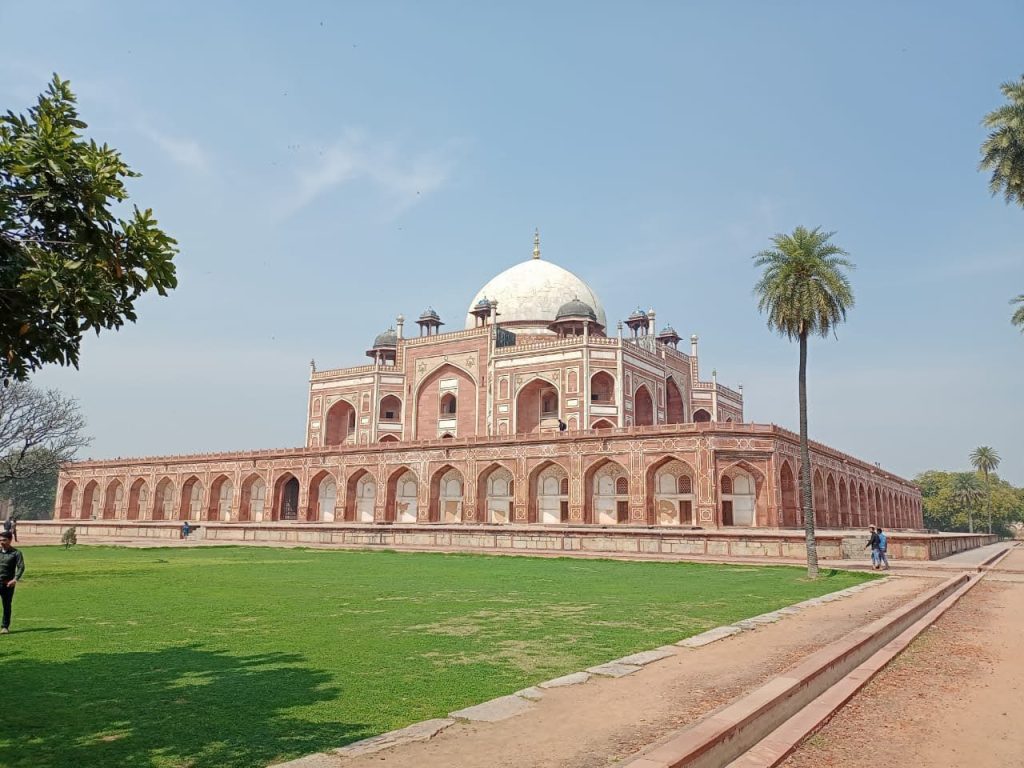
Photo: Own work — CC0, via Wikimedia Commons
Built in the 1560s for the Mughal Emperor Humayun, this red sandstone and white marble mausoleum set within formal Persian-style gardens was the first of its kind in India and directly influenced the design of the Taj Mahal a century later.
Planning your visit
Humayun's Tomb is where Mughal architecture in India begins. Built in the 1560s by the emperor's widow, it was the first garden tomb on the subcontinent and the first major structure to combine red sandstone with white marble inlay — the model that culminated in the Taj Mahal ninety years later, built by Humayun's great-great-grandson.
The layout is a charbagh, a four-part Persian paradise garden divided by water channels, with the mausoleum on a raised platform at the centre. Around 150 Mughal family members are buried in the complex.
The site was restored over a decade by the Aga Khan Trust for Culture, which recovered the garden's water system, replaced concrete with lime plaster and re-laid the sandstone — one of the most significant conservation projects in India, and the reason the monument now looks as it does.
Sunder Nursery next door, restored as part of the same project, is a substantial heritage park with further Mughal tombs.
Bookable options include private car tours of the tomb and combined formats with Sunder Nursery. Current availability is listed below.
Before you book
Where is Humayun’s Tomb?
Humayun’s Tomb is in New Delhi, India. The map on this page marks its exact location.
Do I need to book Humayun’s Tomb in advance?
Private tours are arranged for a set date and time, so they need booking in advance.