National Archaeological Museum of Florence
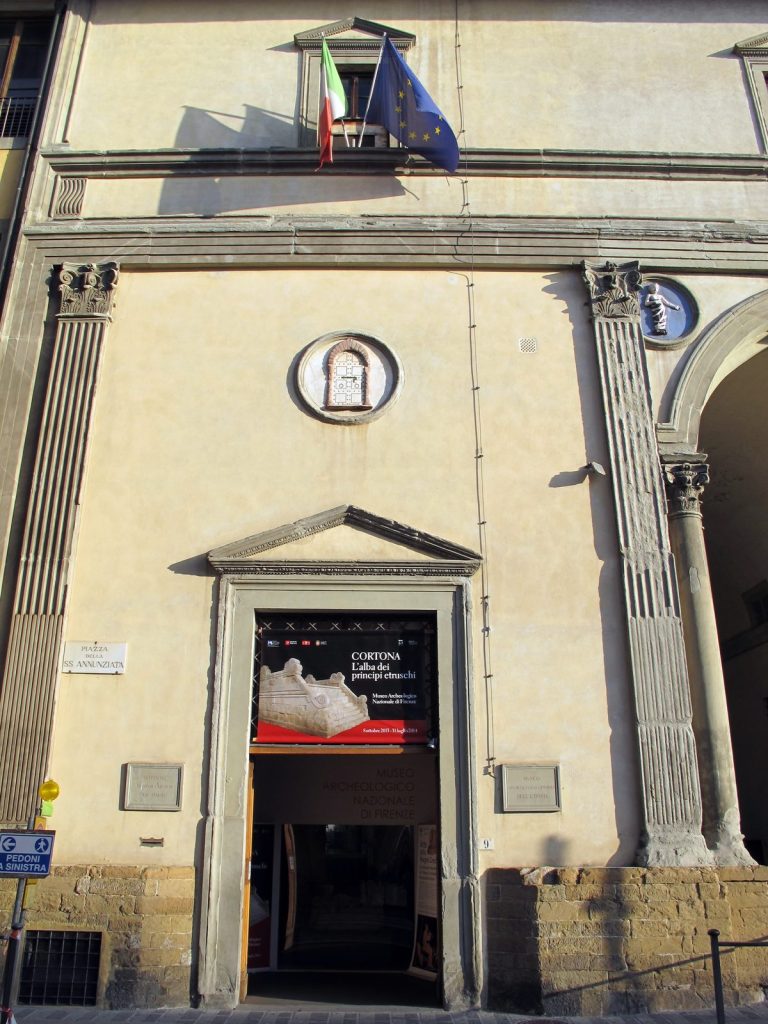
Photo: Own work — CC BY-SA 3.0, via Wikimedia Commons
The National Archaeological Museum of Florence showcases artifacts from Etruscan, Roman, Greek, and Egyptian civilizations, including the Chimera of Arezzo and the François Vase.
Planning your visit
Florence's archaeological museum holds one of the most important Etruscan collections anywhere, and the Etruscans matter: they occupied Tuscany before Rome, wrote in an undeciphered language, and shaped early Roman religion and engineering before being absorbed.
The Chimera of Arezzo is the outstanding object — a fifth-century BC bronze of a lion with a goat's head rising from its back and a serpent tail, found in 1553 and restored by Benvenuto Cellini. The Arringatore, a life-size bronze orator, and the Idolino are comparably significant.
The Egyptian department is the second largest in Italy after Turin's, built from a joint Franco-Tuscan expedition in the 1820s, and includes a remarkably preserved wooden chariot from a Theban tomb.
The François Vase, an Attic krater covered in mythological scenes, is among the most important Greek vases in existence.
It sits near Santissima Annunziata and is consistently quiet. Allow two hours. The main booking is an entry ticket. Current availability is listed below.
Before you book
Where is National Archaeological Museum of Florence?
National Archaeological Museum of Florence is in Florence, Italy. The map on this page marks its exact location.
How long should I allow for National Archaeological Museum of Florence?
Allow two hours. That is the time the collection itself takes at an unhurried pace, before any queue.
Do I need to book National Archaeological Museum of Florence in advance?
Tickets can be bought on the door at quiet times, but booking ahead fixes the date and avoids the queue at busy ones. Live availability is shown on this page.